Serial Killers

More Article »

Crime News

More on this category »

Notorious murders

More on this category »

Historical Crimes

More on this category »

Crime and punishment

More on this category »

Crime History

More on this category »

Unsolved

More on this category »

Young killers

Police videos show Chiefs' Jovan Belcher hours before his death

Saturday, December 8, 2012

Police videos show Chiefs' Jovan Belcher hours before his death
Kansas City police released videos Friday evening documenting the final hours of Chiefs linebacker Jovan Belcher's life.

Footage taken from a camera mounted on the dashboard of a police cruiser shows three officers speaking with Belcher after they responded to a 911 call of a suspicious person sleeping in a black Bentley outside an apartment building on East Armour Boulevard at 3:05 a.m. CT on Dec. 1, less than five hours before he would fatally shoot his girlfriend and then himself.

Belcher cooperated with officers and told them he was heading inside to see a woman who lived in an apartment on the corner of East Armour and Holmes St. When officers determined Belcher would not be driving, he was allowed to go inside.

Belcher was not arrested nor cited, though a police spokesman told USA TODAY Sports earlier this week that officers determined Belcher had been drinking.

"You know you've got a lot riding on this," an officer told Belcher. "You know you've got a lot to lose."

Belcher thanked the officers and said, "I really appreciate it," before he went inside the building.

Police say Belcher killed his longtime girlfriend, Kasandra Perkins, later that morning after an argument in their home, and then committed suicide in the parking lot of the Chiefs practice facility just after 8 a.m.

The dashboard video adds to the timeline of Belcher's final hours, in which he was out partying in the Power and Light District with a woman who was not Perkins.

Police did not name that woman, though the New York Post identified her as Brittni Glass. She is not visible on the video.

While approaching Belcher's car — the Bentley's taillights seem to be on in the video — officers first shined their flashlights inside the windows and eventually knocked on the driver's side window to awaken Belcher, whom police earlier this week said had been sleeping.

On the audio from the police cruiser, officers are heard asking Belcher where he was headed. Belcher's response is inaudible, but the officer confirmed with Belcher that he would not be driving.

"You just need to go upstairs, dude," one officer said. "We're trying to cut you a break here."

Belcher, wearing jeans, a gray shirt, a black jacket and white shoes, got out of the car and spoke to officers for several minutes. Several times he is heard mentioning that he was not driving his car when police found him.

Police also released the dashboard video and dispatch audio from officers responding to Arrowhead Stadium after receiving a call that a man was in the parking lot with a gun. Before officers even arrived, they had confirmation that the shooter at Crysler Avenue was Belcher.

"Who is Belcher? I don't know him. Is he white, black?" an officer is heard saying as a cruiser approached the stadium.

An officer sped through the parking lot around the stadium before stopping outside the Chiefs practice facility. After parking, the officer ordered other police vehicles to silence their sirens as the officer approached the parking lot on foot. The officer said he had a visual of Belcher and others who were negotiating with him outside of one of the building's entrances.

A dispatcher said Belcher was outside of the player's entrance.

Continue Reading | Comment (3)

Israel Keyes, Admitted Alaska Serial Killer Found Dead, Linked To 7 Slayings

Tuesday, December 4, 2012

Israel Keyes
This undated handout photo provided by the Anchorage
 Police Department shows Israel Keyes. Keyes, 
charged in the death of an Alaska barista, has 
killed himself, and authorities say he was linked to at
 least seven other possible slayings in three other states. 
Keyes was found dead in his Anchorage jail cell Sunday, 
Dec. 2, 2012. Officials say it was a suicide.
ANCHORAGE, Alaska — Israel Keyes, in jail for the killing of an Alaska barista, gradually began confessing to investigators that he had killed others: a couple in Vermont, four people in Washington state, someone in New York.

But he was slow to come forward with details, warning investigators he would stop talking if his name was released publicly.

"He was very, very, very sensitive to his reputation, as odd at that sounds," Anchorage Police Chief Mark Mew said. "We had to keep things extra quiet in order to keep him talking with us."

Keyes committed suicide in an Alaska jailhouse Sunday, leaving behind an incomplete picture of a loner who traveled the country for more than a decade, picking victims at random and methodically killing them. Officials believe there are more victims in other states, but they may never know who they are.

Authorities wouldn't say how Keyes killed himself, only that he was alone in his cell. They also did not say whether he left a note.

"We're going to continue to run down leads and continue our efforts to identify his victims so we can bring some closure to the families," said Mary Rook, the FBI supervisor in Alaska.

While under arrest in connection with the disappearance of 18-year-old barista Samantha Koenig, Keyes confessed to the deaths of Bill and Lorraine Currier, of Essex, Vt., who disappeared in June 2011, authorities said. Keyes confessed to other killings without identifying the victims or saying where their remains were located.

The FBI said Monday that Keyes is believed to have committed multiple kidnappings and murders across the country between 2001 and his arrest in March, often flying to an airport, then driving hundreds of miles before targeting victims.

In interviews with investigators, Keyes detailed extensive planning, including burying caches of weapons at various points across the United States. The FBI says it recovered weapons and items used to dispose of bodies from hiding places just north of Anchorage and Blakes Falls Reservoir in New York.

Keyes told investigators he scoped out potential victims at remote locations including campgrounds and cemeteries. He said few of his earlier cases received media attention until the Currier case, telling investigators that one victim had been found but incorrectly labeled as accidental. The FBI says it does not have a name or location in this case.

Keyes also told authorities he robbed several banks to pay for his travel, using money he made as a general contractor as well.

"There's no indication that he was lying," FBI spokesman Eric Gonzalez said, adding that Keyes' DNA has been put in an FBI database available for other law enforcement agencies to use in their own investigations.

Also on Monday, officials at a news conference in Vermont said Keyes described details of the Curriers killings that had not been released publicly.

Authorities said Keyes flew from Alaska to Chicago, then drove to Vermont and picked the Curriers, a couple in their 50s.

He broke into their home and, in their bedroom, Keyes told police, he bound them with zip ties, forced them into their car and drove them to an abandoned house, where he shot Bill Currier with a gun he brought from Alaska, and then sexually assaulted and strangled Lorraine Currier.

Keyes told investigators he chose the Curriers' home because it had an attached garage, no evidence of children or a dog, and the style of the house clued him in to the probable location of the master bedroom.

Keyes previously lived in Washington state before moving to Alaska in 2007 to start a construction business. He also owned property in upstate New York, near the Canadian border.

Ayn Dietrich, a spokeswoman for the FBI in Seattle, said agents are reviewing unsolved murders across the state to determine whether Keyes might have been responsible.

The FBI has consulted with behavior specialists to develop insight into Keyes' personality.

Their analysis is incomplete, but they know he was a loner who didn't have a clear pattern in selecting victims, who varied in gender and age.

Keyes told investigators that he was "two different people."

"The only person who knows about what I'm telling you, the kind of things I'm telling you, is me," he said, according to a March 30 police recording released by the FBI Monday.

Authorities described Keyes as methodical, in the Currier case taking days to find the perfect victim. He was also thorough in disposing of victims' bodies. Only Koenig's body has been recovered.

The FBI contends Keyes killed Koenig less than a day after she was kidnapped. Her body was recovered April 2 from an ice-covered lake north of Anchorage. Her disappearance gripped the city for weeks.

A surveillance camera showed an apparently armed man in a hooded sweat shirt leading her away from the coffee stand. Koenig's friends and relatives set up a reward fund and plastered the city with fliers.

Prosecutors said Keyes stole the debit card from a vehicle she shared that was parked near her home, obtained the personal identification number and scratched the number into the card.

After killing Koenig, Keyes used her phone to send text messages to conceal the abduction. He flew to Texas and returned Feb. 17 to Anchorage, where he sent another text message demanding ransom and directing it to the account connected to the stolen debit card, according to prosecutors.

Keyes made withdrawals from automated teller machines in Alaska, Arizona, New Mexico and Texas before his arrest in Texas, according to prosecutors. He was charged with kidnapping resulting in Koenig's death. Keyes could have faced the death penalty in her case.

Koenig's family said there was no apparent previous connection between the teenager and Keyes. Reached by phone Sunday, Koenig's father, James Koenig, declined to comment on Keyes' death.

Marilyn Chates, Bill Currier's mother, said police contacted her some time ago to tell her about Keyes' confession and to tell her that they believed the couple's killing was random. Authorities called Chates on Sunday to tell her of Keyes' suicide.

"After some thinking, our family has been saved the long road ahead – trials, possible plea agreements and possible appeals – and perhaps this was the best thing that could have happened," she said.
Continue Reading | Comment (1)

The Cathouse Murders

Saturday, November 24, 2012

At approximately 5:30 a.m. on Monday, November 9, 2009, Oklahoma City's 911 emergency dispatch center received a call reporting a house fire on the 1500 block of Southwest 56th Street.
Firefighters on roof of burning house
At approximately 5:30 a.m. on Monday, November 9, 2009, Oklahoma City's 911 emergency dispatch center received a call reporting a house fire on the 1500 block of Southwest 56th Street. The caller, a neighbor down the street from the blaze, was calm as she described the scene to the 911 operator from her home.

"It's a house on fire," she said. "It's coming out of the roof...fire...all over the front porch and out the roof."

"Does anyone live there?" asked the operator.

"Uh, yeah, they do."

Within minutes, firefighters from the Oklahoma City Fire Department (OCFD) were on site attempting to extinguish the blaze that illuminated the early morning sky in that part of the city. Upon their arrival, firefighters made efforts to determine whether anyone was inside the burning single level brick house, and located one body which they managed to remove. Information about the fire was slow in coming at first, and was eventually coordinated through the Oklahoma City Police Department (OCPD).

After extinguishing the fire, which gutted much of the inside of the house as well as the roof, investigators located three additional bodies inside the residence. The bodies were taken to the Oklahoma Medical Examiner's Office where definitive autopsies were conducted on each. Local television reported the finding that three women and one man died in the fire. The fire remained under investigation for some time, but it was soon revealed that the fire had been deliberately set.

Homicide
Although homicide investigators, including OCPD Detective Ryan Porter, were making every effort to maintain control of the case and were revealing details to media outlets in an orderly fashion to avoid compromising their case, it was clear from the outsetespecially with four people dead inside a house that had been deliberately set aflamethat some form of homicide was involved. Despite this obvious conclusion, police officials did not immediately confirm that they were working the case as a homicide investigation, stating instead that they wanted to wait and see the results of the autopsies. Although local reporters had stated that two of the four victims had been identified, the OCPD would not release any names until family members were first notifiedprotocol in such a case.
"We believe we know [the victims' identities], but we certainly want to make sure and err on the side of caution," OCPD Master Sergeant. Gary Knight said.

One of the victims, according to Sgt. Chris Miller, had apparent lacerations to her stomach, face and neck, while the other three victims were burned beyond recognition.

Police investigators also said that they had reason to believe that at least one other person had been inside the house but had left before firefighters arrived. Although they would not say how they had come to that belief, they did indicate that they wanted to speak with the person.

"[Investigators] have not spoken to this person, and obviously they want a chance to do that," said Sgt. Knight.

Police officials neither confirmed nor denied that the person was a suspect, but a television news station reported that the person of interest may have been the renter of the house.

Although police officials had not immediately released any of the victims' names, it was not long before someone placed a makeshift memorial, including a large teddy bear, on the front lawn of the burned-out home in honor of one Jennifer Ermey. The name led to a MySpace tribute page that included a message that stated: "Jennifer Ermey has gone onto heaven R.I.P. 11-09-09." The MySpace message appeared the same day as the fire.

Autopsies

Brooke Phillips - The Cathouse Murders
Brooke Phillips
The autopsies showed that all four victims had been shot and that the gunshots had resulted in their deaths. Two of the female victims had also been pregnantbringing the death toll to six.
"If a woman is pregnant and she is the victim of a homicide, typically that is counted as two homicides," Knight said.

Because the gunshots had been the cause of the victims' deaths, it now appeared that the fire had been set to conceal the crime of murder.

The victims were eventually identified as Brooke Phillips, 22; her unborn baby; Milagros Barrera, 22, also known as Millie; her unborn baby; Jennifer Ermey, 25; and Casey Barrientos, 32.

According to partial autopsy reports, Phillips' cause of death was determined to be a "perforating gunshot wound" to her head, specifically to the right temple. The autopsy report also showed that Phillips' throat had been slit, and she had been stabbed in her abdomen. She also had suffered gunshots to her left arm, left index finger, and right leg, and had cuts to her hands and a wrist. The presence of a petroleum odor was also noted. Barrera's cause of death was said to be "perforating gunshot wounds" to her back and head. Barrera had also been shot in the thigh.

According to charge documents filed in Oklahoma County District Court, all of the victims had sustained stabbing and gunshot wounds.

Although Phillips' body was burned nearly beyond recognition, the postmortem examination revealed a profane tattoo on the inside of her lower lip. Her relatives later told the police she would pull her lip down and expose the tattoo to those with whom she became upset.

According to a friend, Phillips had been shot six times. A relative, said the friend, identified Phillips' badly-burned corpse by the tattoos on her body.

As he continued working the case with his colleagues, Detective Porter indicated in an affidavit and application for an arrest warrant that he had been able to locate and interview an eyewitness who had been present inside the house when the shootings occurred. According to the witness, a person referred to as "Hooligan" had been arguing with one of the victims when the shooting began. Although "Hooligan" told the witness that his problem was not with the witness, the witness nonetheless ran from the house and escaped.

Porter and his colleagues also learned from a neighbor that a car had been heard leaving the house approximately 20 minutes before anyone noticed that the house was on fire.

A short time later, Porter identified "Hooligan" as David Allen Tyner, 28. His whereabouts were unknown.

Search warrant

Following the execution of a search warrant at the crime scene, investigators confiscated eight spent casings from two separate firearms, a folding knife, two box knives, a white Bic lighter, a digital scale, sandwich-sized Ziploc bags, and large garbage bags. They also seized plastic bags containing marijuana, varying in weight from .60 grams to 5.77 grams. It appeared to some investigators that the house may have been the site of a possible drug-dealing operation. Small amounts of currency were also found, along with debit cards belonging to Phillips and other identification, several cell phones, and a pill bottle containing antibiotics that had been prescribed to Phillips. There were also a number of live rounds of ammunition found inside a sock.

In the aftermath of the horrific crime, investigators set up a tip line, and placed a sign with the tip line telephone number outside the crime scene. They also devoted a room on the third floor of the OCPD headquarters building for investigators to examine evidence retrieved from the burnt-out house, utilizing computers and dry-erase boards to document and develop the case.

"There's a tremendous amount of evidence, a tremendous amount of information that they're processing," Sgt. Knight told reporters. "This is something we are taking very seriously, especially when we're talking about a homicide with six victims in one event."

The evening news three days later announced that Phillips had worked as a prostitute at the Moonlite BunnyRanch brothel in Mound House, Nev., not far from Carson City and Reno. The Moonlite BunnyRanch is a legal, licensed brothelprostitution is legal in much of Nevada, with the notable exception of Clark County, where Las Vegas is located.

Brooke Phillips

Brooke Phillips, while working as a prostitute in Nevada, had been featured on the HBO reality TV series, Cathouse.
As the additional information about the case surfaced, it was learned that Brooke Phillips, while working as a prostitute in Nevada, had been featured on the HBO reality TV series, Cathouse. The television program, a documentary of sorts, depicted the lives of those working at the brothel.

Phillips used the pseudonym Hayden Brooks. A native of Moore, Okla., part of the Oklahoma City metropolitan area, she had gained a certain amount of celebrity or notoriety, depending upon one's point of view, from her work on the show. Moonlite BunnyRanch owner Dennis Hof, a frequent customer who had purchased the establishment in 1993 for $1 million, confirmed that Phillips had worked at his establishment for the past couple of years, and characterized her as a "good girl" who had recently returned to Oklahoma after becoming pregnant.

"Give us a little bit of closure and then go ahead and apprehend the criminal that killed this girl and the other people," Hof said shortly after learning of the crime.

According to Hof, Phillips contacted him about two years before her death expressing a desire to work at the Moonlite BunnyRanch. The month prior to her death, she had reportedly told Hof of her pregnancy, her desire to have the baby and her desire to return to work after having the child. Hof said that "the Bunnies were...planning to throw her a baby shower." He said that she had not known who the father was, and had not appeared to care. Three months pregnant at the time of her death, the baby had been due in late spring 2010.

Hof told RadarOnline.com that Phillips had been a pro when it came to stripper pole moves, which she had loved to use to accentuate her beautiful body. She had always been on the pole at the Moonlite BunnyRanch, Hof said, because "she loved it."

"We are replacing the pole...with a brand new one," Hof added. He said the new pole would be inscribed the "Hayden Brooks Memorial Pole." Hof said that they would also place a plaque on the ceiling with a photo of Phillips and the inscription "You'll always be on the pole." Hof described Phillips as having had a great personality, and said that she had been the Miss Congeniality of the brothel.

According to published reports, Phillips was the mother of a six-year-old daughter to whom she had given birth when she was 15. The child reportedly lived with a relative in Oklahoma. The girl's father, Phillips' ex-boyfriend, reportedly had been involved in a custody dispute with Phillips at the time of her death, and learned of Phillips' death through media reports.

The other victims

A possible motive for the multiple murders surfaced as police began to learn more about the other victims of the early morning carnage. Barrientos, the only male victim in the case, had apparently been in and out of prison for drug convictions beginning in 1997. He had also reportedly been involved in a drive-by shooting. Barrientos, who had been released from prison in July 2009, according to the Oklahoma Department of Corrections, had devil's horns tattooed on his forehead and was fond of wearing jewelrylots of it. Theories that a possible drug-dealing dispute may have led to the murders began to emerge, but it remained to be seen whether the cops could build a case around that theory.

Victims from left to right: Jennifer Ermey, Milagros "Millie" Barrera and Casey Barrientos

Not much was known about Barrera. Born in Peru in 1987, she had graduated from Moore High School in 2007, and had worked in retail cellular telephone sales until her death. She was described by family and friends as a "beautiful, loving, and caring person" who had loved life and tried to enjoy it to the fullest.

"She was an amazing person," a friend said. "She was the happiest person."

Similarly, Jennifer Ermey was remembered as a beautiful woman, full of inspiration.

"She was an amazing, sweet person who will be greatly missed by all that knew her," a friend wrote on a MySpace page that had been set up as a memorial. "She had a smile that could light up a room. Her life was cut way too short, but she touched a lot of lives in her short time in this world."

Another friend, who had met Ermey in the eighth grade, characterized her as a good person.

"I don't know anyone who could have a problem with her," the friend said. "She was just an amazing person, a good spirit. I love her. I just feel maybe she was at the wrong place at the wrong time."

Investigators noted that the last entry on Ermey's MySpace page read: "Throwing on my dress and going to pick up Millie."

It was also revealed that investigators had stepped up their efforts to find David Allen Tyner who, according to sources in the prosecutor's office, had closer ties to Barrientos than originally known. It appeared that Tyner, a veteran of the war in Iraq, had worked as a bodyguard for Barrientos. Tyner, a former marine, was also a cage fighter, participating in mixed martial arts full-contact bouts inside a cage.

David Allen Tyner

David Allen Tyner
David Allen Tyner
Aware that he was being hunted as a suspect for six murders, on Monday, Nov. 16, 2009, a week after the slayings, David Allen Tyner surrendered to authorities in Mayes County, northeast of Tulsa, near the Missouri and Arkansas borders. He was taken into custody without incident, and was brought back to the Oklahoma County Jail where he was held pending charges. Detectives indicated that they did not believe he had acted alone, and acknowledged that they had identified a second suspect but were not yet ready to release his name.

"We don't believe [Tyner] acted alone," Knight said. "We've identified the one suspect, but that doesn't yet tell us what his motive is for doing this....Often times these investigations are like a big puzzle to solve, and certainly that can present a challenge, but not a challenge that we can't overcome."

A major reason that detectives did not believe that Tyner had acted alone was the fact that bullet casings from two different guns had been found at the crime scene, typically indicating that at least two shooters had been involved.

There was also speculation that Tyner, for reasons not yet ascertained by police, may have been gunning for Barrientos and that the others had been taken out because they had been witnesses who could identify Tyner to the police if allowed to live.

Investigators learned that Tyner, a member of the Cherokee Nation, was a member of a gang known as the Indian Brotherhood. According to Oklahoma County Sheriff John Whetzel, a number of altercations at three prisons between American Indian and Hispanic inmates had followed Tyner's arrest, and Whetzel and others in Oklahoma law enforcement believed these had been deliberately coordinated and were related somehow to Tyner and to Barrientos, who had been Hispanic. A number of inmates from the correctional facilities affected were hospitalized with stab wounds before corrections officials tightened security and stopped the violent outbursts. No reasons were given as to why authorities believed the violence had been deliberately coordinated.

Tyner had been an All-American wrestler in high school, and it was reported that he had wrestled at the University of Tennessee at Chattanooga prior to joining the Marines. He was characterized by his high school coach, Johnny Cook, as having been a "good kid" and that the charges against him did not fit his character.

"He obviously had a strong work ethic and a strong will to succeed, being a two-time All-American and a state runner-up," Cook said in an interview with the Cherokee Phoenix. "But he was very kind-hearted, too. If someone was being bullied or picked on in school, he would take up for that individual. That's the David I knew...he would give you the shirt off his back."

Tyner was subsequently charged with six counts of murder, but investigators still did not propose a definite motive for the killings, although they continued to theorize that the murders may have been motivated by a drug operation or drug deal gone bad. Tyner has pleaded not guilty to the charges.

Bolstering the potential drug operation theory, in addition to the drugs, paraphernalia, and money found inside the house after the fire had been extinguished, was the fact that Casey Barrientos had felt the need for a bodyguard. Barrientos had also been known to wear a great deal of jewelry, had been present at a location where it appeared that drug deals had been conducted, and an estimated $10,000 in jewelry that Barrientos was believed to have been wearing was mostly missing when his body was found. According to published reports, police believed the shooters had stolen the jewelry: a white gold cross necklace with diamonds, matching white gold and diamond earrings, and a white gold bracelet adorned with diamonds.

A friend of Brooke Phillips maintained that Brooke was not involved with drugs directly and that she had likely been at the wrong place at the wrong time.

"Brooke never used drugs," her friend said. "She barely even drank. But she did date a drug dealer on and off."

Denny Edward Phillips

Denny Edward Phillips
On Monday, April 26, 2010, Denny Edward Phillips, 32, the previously unnamed person of interest in the case, was being sought for the burglary of a Tulsa police detective's home in which guns, a Tulsa police uniform, badges, and other items were stolen. When cornered by Tulsa police officers outside a motel, Phillips, reportedly no relation to Brooke Phillips, allegedly pointed a gun at them and was shot three times, once in the chest and twice in the abdomen. He was hospitalized in critical condition, but survived his injuries.

"He has a history of committing crimes, with a long criminal record behind him, and was a cage fighter like the other guy they already arrested," Gary Gardner, Barrera's stepfather, told RadarOnline.com. "My daughter and her unborn baby, along with the other victims, deserve justice."

According to Oklahoma County District Attorney David Prater, Denny Phillips had been identified as a person of interest in the investigation into the six homicides of November 9, 2009, early in the case. Prater stated in an e-mail to his employees issued prior to the police shootout with Phillips that Phillips was "a very dangerous person who ordered the hits on six people in south Oklahoma City," and that Phillips had reason "to target some associates" in the Oklahoma City area. Prater said that he had issued the warning to his employees because of concerns that Phillips might use the stolen uniform and badges in order to pose as a Tulsa police officer, presumably because of the items stolen from the Tulsa police detective's home.

A subsequent search of the motel room where Phillips had been staying turned up two guns that had been reported stolen from the Tulsa police detective's home. Phillips was not initially charged in the burglary of the detective's home, but the investigation was continuing.

Phillips had spent much of his adult life incarceratedhe was 18 when he was first sent to prison. Phillips' criminal history included 1996 convictions for assault with a deadly weapon and other crimes, including a jail escape. In the assault conviction, he stabbed a male in the shoulder with a belt-buckle knife and pleaded guilty to the charge. He was released in May 2007 after spending nearly 11 years in prison.

Following his release from prison, Phillips took up cage fighting. In January 2010, he was arrested in Mayes County, Okla., during a traffic stop in which officers reportedly found a stolen .40-caliber handgun, along with ingredients that could be used to manufacture methamphetamine. After the traffic stop, an officer reported that Phillips had received text messages on his cell phone in which someone wrote, "need a half, will pay you Monday." Phillips admitted possessing a handgun at the time because, he claimed, he had been threatened by someone.

He was charged in January 2010 in Mayes County District Court as a convicted felon in possession of a firearm, a violation of his parole. Related to the shootout with police in April, Phillips was charged on Thursday, May 20, 2010, with possession of a firearm and of feloniously pointing a firearm at police officer in an indictment filed in U.S. District Court in Tulsa.

Bound for trial

At a preliminary hearing on Tuesday, July 13, 2010, the state court count of possessing a firearm as a felon was dismissed at the request of prosecutors due to Phillips' recent indictment in U.S. District Court. A Tulsa County judge ordered him bound over for trial on a charge of feloniously pointing a firearm at the Tulsa police officers who had tracked him to the motel where the shootout occurred.

Prosecutors also alleged that Phillips was the leader of the Indian Brotherhood gang, of which Tyner was also reputedly a member, and contended that Phillips was a flight risk, filing a motion to raise his bail to $750,000 in the Tulsa case.

Phillips has not yet entered a plea to the charges that have so far been laid. Phillips also has not been charged with the Oklahoma City slayings, but police are continuing their investigation to determine what part, if any, he may have had in that case

As they had from the case's outset, OCPD detectives remained cautious and continued to hold their cards close to the chest, releasing very little information. As of July 2010, the motive for the killings on November 9, 2009, remained unclear, and Tyner had proclaimed his innocence to a relative as well as pleading not guilty in court. Tyner apparently had a number of people rooting for him, including a close friend who had stated that he believed Tyner may have suffered post traumatic stress syndrome following his tour of duty in Iraq. It has been reported that Tyner does not appear to have a prior criminal history, but, so far, Tyner was the only person who had been charged in the Oklahoma City slayings. Police investigation continues, but the events of that fatal night remain to be fully explained.


Continue Reading | Comment

Jersey Bridgeman: Girl Killed While Parents Are In Jail Was 'Amazing Child'

Jersey Bridgeman: Girl Killed While Parents Are In Jail Was 'Amazing Child'

Jersey Bridgeman endured a lot in her young life, including abuse at the hands of her father and stepmother, but school officials say she was still a happy little girl.

Now, with the couple away in prison for chaining her to a dresser last year, authorities are trying to figure out who killed the 6-year-old. Her body was found in a vacant house this week in Bentonville, a northwest Arkansas city best known as the home of Wal-Mart's headquarters.

"To find out that the girl had been abused before, to me it was like: `You've got to be kidding me,'" said Mike Poore, school superintendent in Bentonville, where Jersey attended kindergarten at Sugar Creek Elementary. "How can someone that young go through so much?"

Still, despite the hardships she faced, Jersey managed to delight those she met.

"She's an amazing child," said Mary Ley, communications director for Bentonville schools. "She'd been through a lot and still had joy."

Police in the city about 215 miles northwest of Little Rock have said they're investigating Jersey's death as a homicide, but they won't disclose how she died. In a statement Friday, they said the girl's family members have been cooperating with detectives but do not want to speak to the media "during this time of grieving" and "ask that their privacy be respected."

Authorities haven't arrested anyone in connection with Jersey's death or publicly identified any suspects or persons of interest.

"There's no reason ... for the community to be worried at this point," Capt. Justin Thompson told The Associated Press on Friday. He would not say whether authorities think someone who knew the girl killed her.

Thompson said Jersey's body was found in a vacant house two doors down from the home where she lived with her mother. He said investigators believe the girl died sometime between midnight and 6:53 a.m. Tuesday, when her body was found about 10 minutes after someone called police to report her missing.

Thompson would not say who called 911.

Authorities have searched the home where Jersey lived, the house where her body was found and the home in between the two. Thompson wouldn't talk about what evidence they collected.

Jersey's death comes almost a year after her father and stepmother chained her to a dresser in nearby Rogers.

According to court records, David Bridgeman told an investigator he cut a belt to fit around his daughter's ankle and chained her to the dresser because she got into medication and other things around the house. He and Jersey's stepmother, Jana Bridgeman, both pleaded guilty in June to false imprisonment, permitting abuse of a minor and endangering the welfare of a minor.

Jana Bridgeman is serving a 12-year prison sentence, plus three years for a probation revocation. David Bridgeman is serving an 18-year prison sentence.
Continue Reading | Comment (2)

Donna Willing Murder: Prosecutors Accused Sex Offender Robert Hill In 1970 Cold Case

Monday, November 19, 2012

Donna Willing Murder: Prosecutors Accused Sex Offender Robert Hill In 1970 Cold Case
MILWAUKEE -- Virginia Davis describes says the pain left behind by her 9-year-old sister's 1970 rape and strangulation as being like "a million holes."

Only 4 years old at the time, Davis knew little about the crime. The subject remained off-limits for the next four decades for many in a family that hoped to forget the hurt. But Davis couldn't forget, and after years seeking help to solve her sister's killing, she's preparing to face the man police believe is responsible.

On Monday, prosecutors will argue that a childhood neighbor and convicted sex offender – who they say confessed to the killing but has since recanted – should go to trial in the death of Donna Willing. With physical evidence in the case lost or destroyed, prosecutors say the will argue under the state's sex offender law that Robert Hill, 73, is a sexually violent person and must remain in custody indefinitely.

Davis says that when she was a child, her sisters would scold her for talking about Donna, warning, "You don't want to make mom cry, do you?" Most of the siblings don't discuss it even now.

But Davis needed answers. At 15 she found the courage to go to the library and read news coverage about her sister's death. Every detail discovered since has helped.

"I didn't feel like so lonely, I didn't feel so empty, I didn't feel like I had a million holes anymore," said Davis, now a mother of three who lives in suburban Milwaukee. "I just started feeling like it's easier, it's easier, it's easier now. I can talk about her now. I can speak her name."

This 1963 family photo shows Donna Willing, left, with her sisters, Susan and Barb at Christmas. Donna was raped and strangled in 1970.
This 1963 family photo shows Donna Willing,
left, with her sisters, Susan and Barb at Christmas.
Donna was raped and strangled in 1970.
Davis clearly remembers the afternoon of Feb. 26, 1970. Her big sister Donna was reading to her from a favorite book about animals as they sat on the couch. Her mother wanted Donna to go to the bakery for bread, but Virginia purposely delayed the trip, begging for one more story.

"I remember seeing out the window, it was getting dark and thinking `Mom won't make her go if it gets dark. She'll send (my brother) or somebody else. She can't go,'" Davis recalls. "We were afraid of the boogeyman and stuff back then. The boogeyman will get her if she goes out after dark."

Donna walked out at 5:15 p.m. A witness later saw her get into a green car. Less than two hours later, a man discovered her bruised and bloodied body under a car in his garage about a mile away.

Newspaper reports at the time said police had people of interest, but no leads panned out.

In 2004, Virginia Davis saw a Milwaukee Journal Sentinel story about police arresting an 83-year-old man for a 1958 murder based on DNA evidence. She called the reporter for help getting police to take another look at her sister's case.

A cold case unit that formed in 2007 did, and soon focused on Hill. He had lived next door with his wife and five children and Davis said she remembered playing with his son. She also remembered his wife, who always yelled, but not him.

Prosecutors soon discovered physical evidence in Donna Willing's case had been lost during a flood or when detectives cleaned out the evidence room in the 1990s, according to police Lt. Keith Balash. So investigators in 2008 began interviewing Hill in prison – where he was serving a 10-year sentence for sexually assaulting four children under the age of 10 between 1995 and 2002.

Hill first told police he sexually assaulted Donna after she got into his car that night, according to court documents. She began to squirm and slapped him. He became angry, afraid she would tell on him. He strangled her and dumped her in a garage. It all took about 10 minutes, he said.

In another account outlined in court documents, Hill said he molested Donna for years, picked her up and had sex with her. After she screamed, he put his hand over her mouth and strangled her.

Hill, who is now being in held a supervised facility, has since recanted both statements. Balash said Hill knew specifics of Donna's injuries that hadn't been released.

Hill's attorney, Robert Prifogle, didn't return a phone call seeking comment before Monday's hearing.

This undated family photo shows the home of Donna Willing. Donna was raped and strangled in 1970. Police have identified Donna Willing's childhood neighbor as the alleged killer: 73-year-old Robert Hill.
This undated family photo shows the home of 
Donna Willing. Donna was raped and strangled in 1970.
Police have identified Donna Willing's childhood neighbor as 
the alleged killer: 73-year-old Robert Hill.
Before her mother died in 2009, Davis finally asked why she needed Donna to go to the bakery. Her mother said she wanted to make French toast for dinner. That filled a big hole. This year, Davis met the man who discovered his sister's body – another big hole filled. She said she had blamed herself when she was younger for delaying her sister's trip until after dark, but no more.

Davis chokes up when talking about her gratitude for the cold case detectives who pursued the case.

"I want to invent or create a word and I can't come up with anything yet that is the equivalent to how I feel," she said.
Enhanced by Zemanta
Continue Reading | Comment (1)

Lyric Cook-Morrissey, Elizabeth Collins Parents Appeal To Kidnapper

Thursday, November 15, 2012

The parents of Lyric Cook-Morrissey and Elizabeth Collins, two young Iowa cousins missing for four months, have issued an open letter to whomever is responsible for the disappearance of their children.

Lyric Cook-Morrissey, Elizabeth Collins Parents Appeal To Kidnapper

The letter was published Tuesday in the Waterloo-Cedar Falls Courier. It reads:

To Whom it May Concern:
We would use your name, but we don't know who you are. Or maybe we do? Maybe you are someone who knows the girls? Maybe you are someone who just acted upon an impulse? Maybe you planned to take them? We don't know, because we don't know who you are.


But we can sort of imagine that you must not have had the things you needed to grow up feeling safe and loved. Because only someone who hurts inside would hurt another person and their family. We've all heard the saying, "Hurt people, hurt people." We believe that is true.


We are so sorry for whatever happened to you, when you were growing up. Certainly, all children do not receive all the love and care they deserve. Some are even abused by those who are supposed to have taken care of them. When that happens, it is very wrong.


Taking the girls from us has caused much pain, pain for them, pain for us and our families. Since the time you took them, maybe you've wondered more than a few times, how you could ever make it right. How to be a hero, not a monster. Things probably look pretty hopeless for a good outcome.


We want you to know that we are praying for you to do the right thing. By releasing the girls, everyone wins. Even you. The person who took them.


Imagine how it will feel to have everyone remember that you were the one person, in all the missing children cases, the one person who cared enough to let the girls go! You will not be remembered as the one who took the girls, but as the one who let them come home.


Our lives have not been the same since July 13. Please, let our girls come home to us.


Do the right thing. Be a hero.


Sincerely


Drew and Heather Collins


Dan and Misty Morrissey-Cook


Lyric Cook-Morrissey, 10, of Waterloo and her 8-year-old cousin Elizabeth Collins of Evansdale were last seen July 13, when they left their grandmother's Evansdale home on a bike ride. The girls' bikes and one of their purses were found later that day on a nature trail that runs along Meyers Lake. Despite multiple large-scale searches, the girls' whereabouts remain a mystery.

Investigators suspect the girl's were kidnapped, but have not found any evidence suggesting where they might be held. According to the Black Hawk County Sheriff's Office, investigators continue to receive tips and are following up on leads.

Also on Tuesday, the girls' family members and dozens of friends and supporters gathered at Countryside Vineyard Church in Evansdale for a prayer vigil to mark four months since Lyric and Elizabeth went missing.

Elizabeth is described as a white female, 4 feet 1 inch tall, 65 pounds, with sandy hair and blue eyes. Lyric is white, 4 feet 11 inches tall, 145 pounds, with brown hair and blue eyes.

Anyone with information on the girls' whereabouts is asked to call the tip line at (319) 232-6682 or 1-800-346-5507. Tips can also be emailed to OurMissingIowaGirls@dps.state.ia.us.
Continue Reading | Comment (2)

BBC ARABIC WORKER CLUTCHES BABY SON KILLED IN GAZA STRIKE


Pictures of a BBC worker cradling the body of his 11-month-old baby son after a Gaza strike have emerged online.

Jihad Misharawi, of BBC Arabic, lost baby Omar after his house was struck in Israel's air strike on Wednesday.
Jihad Misharawi weeps as he holds the body of his 11-month-old son Omar following an Israeli air strike
in Gaza City

Jihad Misharawi, of BBC Arabic, lost baby Omar after his house was struck in Israel's air strike on Wednesday.

Mr Misharawi's sister-in-law was killed and his brother was seriously injured in the attack.

BBC Foreign Editor Jon Williams this morning tweeted an image of the tragedy and a message of thanks to everyone who had sent condolences to his colleague.

The strikes came after Hamas's top military commander Ahmed Said Khalil al-Jabari was killed in Gaza on Wednesday.

Eleven Palestinians were killed in the ensuring Israeli operation, the BBC reports, although it is unknown if Mr Misharawi's son and sister-in-law are included in this figure.

On Thursday morning three Israelis were killed after rockets were fired from Gaza.
Continue Reading | Comment

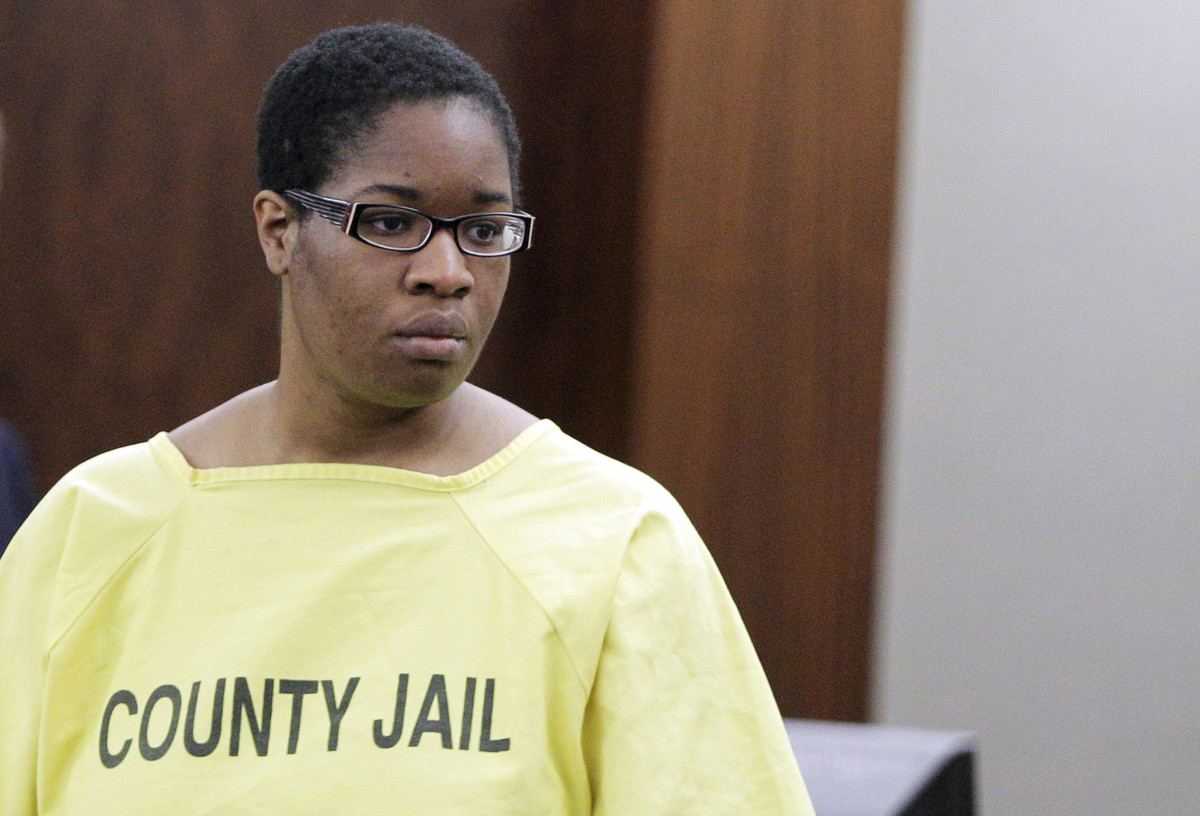
Jessica Tata's Lawyers Ready Defense In Deadly Day Care Trial In Houston

Tuesday, November 6, 2012

Jessica Tata's Lawyers Ready Defense In Deadly Day Care Trial In Houston
HOUSTON -- Attorneys for a Texas woman facing a murder charge after a fire at her home day care killed four children and injured three other kids could begin presenting their case to jurors.

However, Jessica Tata's defense team declined to say how many witnesses, if any, they planned to call Tuesday to testify in a Houston courtroom.

Prosecutors rested their case against Tata on Monday after calling about 30 witnesses over nearly two weeks.

Investigators allege that Tata had left the seven children she was caring for alone at her home to go shopping at a nearby Target store when oil in a pan ignited atop a stovetop burner that had been left on. The children in the February 2011 fire ranged in age from 16 months to 3 years old.

Tata's attorneys insist she never intended to harm the children and that she tried to save them from the fire.

Tata, 24, is charged with four counts of felony murder but is currently being tried only in the death of 16-month-old Elias Castillo. She faces up to life in prison if convicted.

During Tata's trial, which began Oct. 24, surveillance video was presented that showed her shopping at Target just before the fire occurred. A former Target manager told jurors that Tata did not seem to be in a hurry after realizing she had left the stove top burner on while the kids were at the day care.

Tata went through an orientation class in which she was told of her responsibilities as a child care provider, according to Susan Lahmeyer, a former district director of licensing with the Texas Department of Family and Protective Services, which oversees day care facilities.

"The cardinal rule in child care is supervision of children," said Lahmeyer, one of the prosecution's last witnesses.

DeGeurin, Tata's attorney, has suggested to jurors that the deadly blaze could have been sparked by a malfunctioning stove.

Neighbors testified about hearing the children crying during their unsuccessful attempts to reach them during the blaze. Parents of the children who died or were injured told jurors they had trusted Tata, believing she was qualified. Several 911 calls that were made on the day of the fire, including one by Tata, were played for jurors. Tata burst into tears when her call – in which some of the children can be heard crying in the background – was played.

Along with the murder counts, Tata was indicted on three counts of abandoning a child and two counts of reckless injury to a child.
Continue Reading | Comment (1)

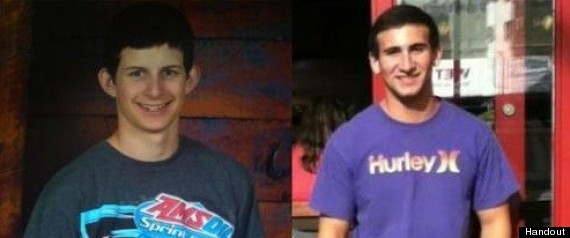
Jake Ziegler And Ray Pierce Missing: Teenagers' Car Found In S.C. River With Two Bodies Inside

Tuesday, October 30, 2012

A car containing what authorities believe are the bodies of Jake Ziegler and Ray Pierce, two North Carolina teens missing more than three weeks, was found Sunday under a highway bridge in South Carolina, police said.

Jake Ziegler, Ray Pierce: Bodies of missing N.C. teens found in car submerged in S.C. river, police say


According to Catawba County Sheriff Coy Reid, the vehicle was found by volunteer searchers from the Community United Effort Center for Missing Persons out of Wilmington, N.C. The organization spotted the vehicle upside down in the Wateree River in Kershaw County, S.C., late Sunday afternoon. The vehicle was completely submerged in the water about 30 feet from the shoreline, Reid said.

Evidence at the scene suggests the vehicle went off the left side of Interstate 20 East near the 96 mile marker. It then traveled down a steep embankment near a bridge that crosses Lake Wateree and came to rest in the river, police said.

Autopsy results are pending, but police said the license plate on the vehicle matches the one of the vehicle the teens were driving, and it's likely the two victims are the missing young people.

Ziegler, 18, and Pierce, 17, both high school seniors from Sherrills Ford, N.C., have been missing since Oct. 13.

On the morning of their disappearance, the boys told friends they planned to drive to Myrtle Beach, S.C., but would be back by the following day. Pierce sent a text message to his girlfriend at about 1:30 a.m. saying, "We're almost at the beach." No other messages were sent.

From the start of the search, investigators operated under the suspicion that the boys had been in an automobile accident. The green Pontiac in which the pair was traveling made it difficult for authorities to spot the wreckage.

The "Help find Jake Ziegler & Ray Pierce" Facebook page issued a statement late Sunday night about the latest developments.

"Please continue to pray for [the families], for this will be the hardest thing they will go through in their life."

Continue Reading | Comment

Samuel Cutrufelli, Accused Burglar, Sues Jay Leone, 90, For Shooting Him During Alleged Robbery

Samuel Cutrufelli, Accused Burglar, Sues Jay Leone, 90, For Shooting Him During Alleged Robbery
A 90-year-old man who shot a robbery suspect is now being sued by the accused burglar.

Back in January, Sam Cutrufelli allegedly entered the Greenbrae, Ca., home of 90-year-old Jay Leone and began robbing the senior citizen at gunpoint. At one point, police say, Leone convinced the suspect to let him use the bathroom, where he hid his own guns, and the two then exchanged gunfire.

Leone shot Cutrufelli three times before the two men began to wrestle each other. Eventually, Cutrufelli allegedly attempted to shoot Leone in the head, only to realize he was out of bullets.

The invader then ran from the home, and he was eventually charged with attempted murder, burglary, robbery and firearms offenses by a felon.

Now, Cutrufelli, 31, is suing Leone for causing him "great bodily injury, and other financial damage, including loss of Mr. Cutrufelli's home, and also the dissolution of Mr. Cutrufelli's marriage," according to SourceNewspapers.com.

Cutrufelli is near the end of his criminal trial and could face life in prison if convicted. If he is acquitted, his lawyer, Sanford Troy, believes his client's suit against Leone will be successful, but said if his client is convicted, he might suggest dropping the suit.

"All of the people that are commenting believe Mr. Cutrufelli is guilty," Troy told the Marin Independent-Journal. "And that's not the American system of justice. They're entitled to their opinion, but Mr. Cutrufelli is entitled to the presumption of innocence."

Leone believes the lawsuit is ridiculous.

"He's the one who busted my door in," Leone said, according to the New York Daily News. "I'll just countersue him then. That's what I'll need to do."

Leone isn't the only one. Two legal experts contacted by the Marin Independent-Journal expressed doubts that Cutrufelli could win his suit based on the facts as presented by the prosecution, and one predicts it could be thrown out before it ever goes to court.

Cutrufelli's lawsuit is scheduled for a case management conference on March 13, 2013.
Continue Reading | Comment

Mass Shooting Reported Near Wisconsin Mall

Sunday, October 21, 2012


A mass shooting occurred on Sunday near a mall in Wisconsin, WISN 12 News reports.


The incident took place near Brookfield Square Mall in Brookfield, Wis.

The shooting suspect has been identified as 45-year-old Radcliffe Haughton, according to sources at Reuters. Haughton may have been in an ongoing domestic dispute with a woman who worked at the Azana Spa. NBC News reported that a judge filed a protection order against him days ago.

Haughton is still at large.

A hospital spokeswoman told CNN that at least seven people have been shot. According to the AP, four people have been brought to the hospital will non-life threatening injuries. Three more patients are expected at the hospital soon.

No fatalities have been reported.

CNN reports that the shooting may have occurred at the Azana Spa in the area. The shooting may be part of an ongoing domestic dispute, in which someone at the spa was going through a divorce, NBC News reports.

WTMJ, a local radio station, reports that the suspect is still at large. Authorities are searching for a 6-foot-1-inch, 270 pound African-American man with a bald head and brown eyes. He may be driving a 2003 black Mazda Protege with license plate No. 171-KZD.

Medical and emergency personnel have arrived on the scene. The mall, as well as some nearby roads and businesses, have been placed on lockdown.

WISN reports that the FBI is sending staff to help out local authorities.

It was the second mass shooting in Wisconsin this year. Wade Michael Page, a 40-year-old Army veteran and white supremacist, killed six people and injured three others before fatally shooting himself Aug. 5 at a Sikh temple south of Milwaukee.

The shooting at the mall took place less than a mile from where seven people were killed and four wounded on March 12, 2005, when a gunman opened fire at a Living Church of God service held at a hotel.

Follow our live breaking news coverage of this story


Visit NBCNews.com for breaking news, world news, and news about the economy
Continue Reading | Comment (7)

Oklahoma Girl Shoots Home Intruder: 12-Year-Old Uses Family's Gun To Protect Self, Home

Saturday, October 20, 2012

When one Oklahoma girl found herself in a tough spot, she took matters into her own hands.

Police say the Calera 12-year-old used the family's gun to shoot and injure an alleged home invader on Wednesday, KFOR reports.

"And what we understand right now, he was turning the doorknob when she fired through the door," said the Bryan County Undersheriff Ken Golden, according to News9.

Police say the girl contacted her mother, who instructed her to take the weapon, hide in a closet and phone police.

"I see a lot of girls on TV that get their house broken into and they turn up missing and just knowing that that could have happened to me. I was scared," she said, according to KOCO.

The suspect was taken to a hospital and then sent to the Bryan County jail, according to NewsOK.

Continue Reading | Comment (3)

Missing Whitney Heichel's Body Found; Jonathan Holt Arrest

Missing Whitney Heichel's Body Found; Jonathan Holt Arrest
Whitney Heichel
Searchers found the body of a young Oregon woman who vanished this week on her way to work and a neighbor has been arrested, Gresham police said late Friday night.

The body of Whitney Heichel, 21, was found on Larch Mountain, a remote, forested area east of Gresham, Police Chief Craig Junginger told a news conference.

After collecting DNA and fingerprints and conducting three interviews over three days, police arrested Jonathan Holt, 24, of Gresham, for investigation of aggravated murder, the chief said.

Holt lived in the same apartment complex as Heichel and her husband.

The Starbucks barista reportedly left her apartment for work at about 6:45 a.m. Tuesday on a drive that typically takes less than five minutes.

Her husband, Clint, called police roughly three hours later. He told investigators he tried to reach Whitney multiple times after her boss alerted him that she never arrived for her 7 a.m. shift.

Police said Heichel's ATM card was used at a nearby Troutdale gas station at 9:14 a.m. Tuesday. Two hours later, her sport utility vehicle was found in a Wal-Mart parking lot with the passenger side window smashed.

A child later found her cell phone in a field that lies between the gas station and the Wal-Mart, giving investigators another venue to search.

Police have been searching Larch Mountain since Wednesday, believing that Heichel's SUV was driven there.

Detectives interviewed Holt on Wednesday and Thursday before arresting him during a Friday night interview, the chief said.

There were "many inconsistencies" in Holt's interviews, Junginger said.

Additional crime lab evidence received Friday morning tied him to Heichel's vehicle, the chief added.

It was not immediately known if Holt was represented by a lawyer.

Jim Vaughn, a family spokesman, addressed the Friday night news conference, thanking police for their commitment in the case.

"Really, words can't begin to express the sadness that our families are experiencing tonight," Vaughn said.

"Whitney was a very loving person," he added. "She was warm, she was kind, she was everything you would want in a friend, relative, spiritual fellow worshipper."

He asked for privacy for the family, saying "our loss and heartache is too much to bear right now."

Police took no questions.

Continue Reading | Comment (5)

Elizabeth Escalona's 99-Year Sentence For Gluing Child's Hands To The Wall Considered 'Harsh'

Thursday, October 18, 2012

Elizabeth Escalona, 23, sits in a courtroom to be sentenced, in Dallas, Monday, Oct. 8, 2012. Escalona pleaded guilty on July 12, 2012, to injury to a child and is facing up to life in prison. A doctor has testified that the Texas mother glued her 2-year-old daughter's hands to a wall and beat the toddler so badly that she suffered significant brain trauma and bleeding inside her skull.
The 99-year prison sentence imposed by a Dallas judge last week on a mom who glued her 2-year-old daughter's hands to the wall was more than a punishment -- it's an unexpected warning to child abusers across the state.

The details of the physical abuse virtually assured a lengthy term, lawyers told HuffPost. Elizabeth Escalona stuck her daughter Jocelyn's hands to the wall at the end of a brutal beating last year that left the toddler with a fractured rib, bleeding in her brain and bite marks. It sent her into a coma for days. The 23-year-old mother of five exploded in rage because of potty training challenges with Jocelyn, according to testimony from her other children.

In a state known for harshly punishing convicts, District Judge Larry Mitchell's sentence still commanded attention.

"It is very unusual and it's high time," said Madeline McClure, executive director of anti-child abuse organization TexProtects. "There's too much leniency in letting parents go."

Extreme sentences aren't unusual in Texas. In 2008, a jury sentenced James Kevin Pope to 40 life terms for sexually abusing three girls. (He's eligible for parole in 3209). In August, Rickie Moore, another sex offender, got 52 life sentences for sex crimes against three girls.

The severity of the violence in Escalona's case was heart-wrenching, but the case didn't involve sexual abuse, and Jocelyn survived and is expected to fully recover physically.

"That's a very harsh sentence for any judge," said Texas County and District Attorney Association President Lee Hon.

Hon has prosecuted fatal child abuse cases in southeastern Polk County that resulted in shorter prison terms. However, he cautioned against comparing other cases to this one. "It may just mean that the judge in this case was trying to send a harsh message."

Texas needs help deterring child abuse, experts said. It leads the country in child deaths from abuse and neglect, according to statistics reported by CBS affiliate KTVT earlier this year.

Mitchell could have sentenced Escalona to anything from probation to life. She pleaded guilty in July to one count of first degree injury to a child, a crime more serious than attempted murder in Texas.

The 99-year sentence demonstrates Mitchell's apparent belief that Escalona cannot be trusted in society, especially around her children, observers said. She is eligible for parole in 30 years

"I expect he didn't think there was much chance for rehabilitation," said Barry Sorrels, a Dallas defense attorney. "The facts in a child abuse case can be so aggravated and so horrific that a sentence of life can be justified."

Tapes of Escalona as a teen threatening to kill her mother were played during the sentencing phase, as well as graphic photos of bruises on Jocelyn. The prosecution said Escalona was a former gang member and labeled her a "liar" and "monster."

Mitchell, a Democrat reelected to the bench in 2010, didn't return repeated calls for comment. During the sentencing, he said: "On Sept. 7, 2011, you savagely beat your child to the edge of death … for this you must be punished."

Defense attorney Angie N'Duka tried to elicit sympathy for her client by saying that Escalona was raised in a home where drugs and violence were common. N'Duka didn't return calls from HuffPost, but told reporters last week that the sentence "is way too harsh. She is just a kid. She's only 23-years-old. She's been a victim all her life."

After a conviction, defendants in Texas choose either a judge or jury to decide their sentence. Given the graphic evidence presented, it's unlikely jurors' sentence would have been better for Escalona.

"Generally, Texas juries are harsh," said Lydia Clay Jackson, president of the Texas Criminal Defense Lawyers Association. "A jury would probably do the same thing."

Whether or not Escalona would have fared better in front of a jury is impossible to know. Lead prosecutor in the case, Eren Price, however, told HuffPost that she got what she deserved.

"I've never had a case like this with a collection of injuries that I believe constitutes child torture," said Price, who wasn't surprised by the sentence. "The judge delivered what is justice for Jocelyn. Jocelyn deserves to go through life with as much peace as we can give her."

Continue Reading | Comment (6)
 
The World Of Serial Killers | Site map
Template Modify by Creating Website. Inpire by Darkmatter Rockettheme Proudly powered by Blogger